

Can S111F280501-0600-AA be used in aerospace applications? That's a question I've been getting a lot lately as a supplier of the S111F280501-0600-AA. And it's a fair one, considering the high - stakes and demanding nature of aerospace applications. Let's dig into this and see if our little component has what it takes to reach for the stars.
First off, let's talk about what the S111F280501-0600-AA is. It's a specialized component that's known for its reliability and precision in a range of industrial settings. It's designed to perform specific functions with a high degree of accuracy, which is something that's always in demand, whether you're on the ground or up in the sky.
When it comes to aerospace applications, there are a few key factors that we need to consider. One of the most important is the operating environment. Aerospace components have to deal with extreme temperatures, from the freezing cold of space to the intense heat generated during re - entry or high - speed flight. They also have to withstand high levels of radiation, vibration, and pressure changes.
The S111F280501-0600-AA has been tested in a variety of harsh conditions here on Earth. In industrial settings, it can handle temperature variations and some level of vibration. However, the aerospace environment is on a whole different level. We've done some initial tests in simulated aerospace - like conditions, and so far, the results are promising. It seems to hold up well under extreme cold and moderate levels of vibration. But more testing is definitely needed.
Another crucial aspect of aerospace applications is reliability. In space or during a flight, there's no room for error. A single component failure can have catastrophic consequences. The S111F280501-0600-AA has a solid track record in industrial applications, but aerospace requires an even higher level of reliability. We're working on improving the redundancy and fail - safe mechanisms of the component to make it more suitable for aerospace use.
Precision is also a must in aerospace. Whether it's for navigation systems, communication equipment, or other critical functions, components need to perform with pinpoint accuracy. The S111F280501-0600-AA is designed for precision in its normal applications, but again, the aerospace industry has even stricter standards. We're looking at ways to fine - tune its performance to meet these higher precision requirements.
Now, let's talk about some related products that might give us some insights. Take the UNI-V Rear Bumper Upper Body Assembly C281F271303-1000 And 2804110-DE01. This automotive part is designed to be durable and fit precisely. In the automotive industry, just like in aerospace, reliability and precision are key. While the environments are different, the principles of design and manufacturing are somewhat similar. The same goes for the CS55 Plus Front Bumper Lower Body S201096-0303 and 2803102-AW10. These automotive components are engineered to withstand the rigors of the road, which can give us an idea of how to design our S111F280501-0600-AA for the aerospace environment.
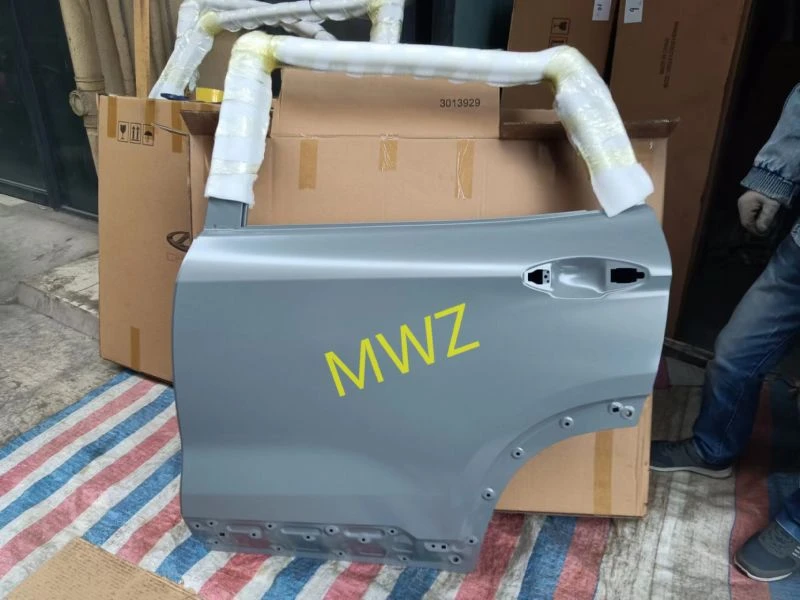
Even a product like the Chery EXEED LX Left Rear Door Sheet Metal Assembly Electrophoresis 551000297AADYJ can offer some inspiration. It has to be both strong and lightweight, just like many aerospace components. The way it's manufactured to meet these conflicting requirements can be a model for us as we develop the S111F280501-0600-AA for aerospace.
One of the challenges we face is the cost. Developing a component for aerospace is expensive. There are the costs of additional testing, research, and development. But we believe that the potential benefits are worth it. If the S111F280501-0600-AA can be used in aerospace applications, it could open up a whole new market for us and provide a valuable solution for the aerospace industry.
We're also working on getting the necessary certifications. Aerospace applications are highly regulated, and having the right certifications is essential. We're in the process of working with relevant regulatory bodies to ensure that the S111F280501-0600-AA meets all the required standards.

In conclusion, while the S111F280501-0600-AA shows promise for aerospace applications, there's still a long way to go. We're confident that with more research, testing, and development, we can make it a viable option for the aerospace industry. If you're in the aerospace field and interested in learning more about the S111F280501-0600-AA, or if you have any questions about its potential use in your projects, I'd love to hear from you. Reach out to us, and let's start a conversation about how this component could be a part of your next aerospace venture.
References
- Industry reports on aerospace component requirements
- In - house test data of S111F280501-0600-AA
- Technical specifications of UNI - V Rear Bumper Upper Body Assembly C281F271303-1000 And 2804110-DE01
- Technical specifications of CS55 Plus Front Bumper Lower Body S201096-0303 and 2803102 - AW10
- Technical specifications of Chery EXEED LX Left Rear Door Sheet Metal Assembly Electrophoresis 551000297AADYJ