

The braking system is the key to the safety of the car, and the brake is the key part to achieve deceleration and stop. When choosing brake components, many owners and procurement professionals will notice that while front and rear brake pad assemblies look similar, they vary widely in terms of load characteristics, structural design, wear patterns, function and performance requirements.
So what's the difference between a rear brake pad assemblies and a front brake? In this paper, according to the working principle of automobile braking system and the application of parts, a detailed analysis is made.
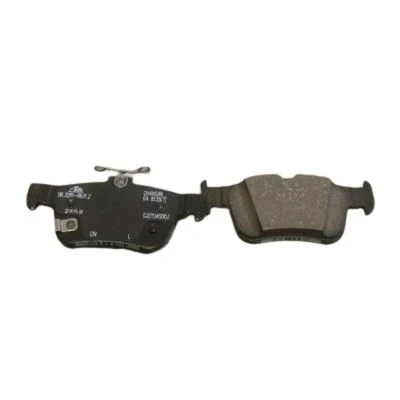
1.Differences in Braking Force Distribution
One of the main differences between front and rear brake pads lies the proportion of braking force they bear during braking.
When the vehicle brakes, inertia causes the center of gravity to shift forward, placing more load on the front wheels. Therefore, the front wheel brake system handles most of the braking force.
In general:
The front braking system bears a large proportion of braking power.
The rear braking system mainly helps the vehicle slow down steadily.
As a result, front brake usually has to withstand greater braking force and a higher thermal load, while rear brake pad assemblies operates under relatively low pressure.
2.Differences in structural design
While the front and rear brake pads are made of friction material, backing plate and related hardware, their structural design varies due to their unique operating environments.
Features of front brake pads:
Since the front braking system must handle a large amount of braking force, they are usually designed to:
friction surface area is large.
Thicker friction material;
Superior heat dissipation capabilities;
The requirements for high temperature stability are more stringent.
Features of rear brake pad assemblies:
Rear wheel brake is mainly used to assist braking and maintain vehicle stability, so it is usually designed to give priority to:
Brake stability;
Noise control;
Long-term durability;
Compatibility with electronic parking brake (EPB) systems.
For some models, the rear brake pad assembly must also integrate or accommodate the electronic parking brake (EPB) mechanism.
3. Differences in temperature and wear
Because the front wheels bear on a larger proportion of the braking force, front brake usually produces more frictional heat during operation. For prolonged high-speed braking or frequent braking:
Front brake pads wear out quickly.
Temperature fluctuations is pronounced.
High heat resistance is required.
Rear brake pad assemblies tend to wear out more slowly because they bear a smaller share of the braking force.
However, in new energy vehicles, energy recovery systems reduce the demand for mechanical braking, so the pattern of wear between front and rear brakes can shift and needs to be assessed according to vehicle type and operating environment.
4. Differences in functional applications
Key features of front brake pads:
Provide primary braking force;
Reduce speed Rapidly;
Deal with emergency braking requirements.
Key features of rear brake pad assemblies:
Assist vehicle deceleration;
Maintaining a balanced braking force distribution;
Enhanced brake stability;
Work with parking brake system.
Rear brake pad assemblies must meet additional functional requirements, especially in vehicles with electronic parking brake (EPB) systems.
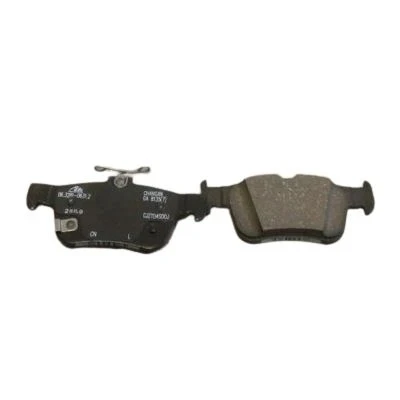
V. Differences in compatibility with electronic parking brakes
Hyundai is increasingly utilizing electronic parking brake systems.
Because traditional mechanical handbrakes usually act on the rear wheels, many vehicles have to integrate the rear braking systems with an EPB actuators.
Rear brake pad assemblies may need to consider:
Compatibility with electric actuators;
Adapt to caliper structure;
Electronic control response;
Parking lock performance.
By contrast, front brake pads is mainly used for service braking systems.
Therefore, in the field of new energy vehicles and intelligent cars, the structural design of rear brake pad assemblies is becoming more and more complicated.
6. Differences in material selection
Brake pad material directly affects brake braking force, noise, service life and comfort.
Common friction materials include:
Semi-metallic materials
Features:
Strong braking force
High temperature resistance;
Suitable for high load braking environment.
Ceramic materials
Features:
Low braking noise
Minimal dust generation;
comfort levels is high.
NAO (Non-Asbestos Organic) materials
Features:
Stable friction performance;
Suitable for passenger vehicle applications;
comfort levels is high.
Front and rear brake pads can be utilized in different formulations to meet the specific performance requirements of their respective positions. Difference in Replacement Intervals
Because of different workloads, the front and rear brake pads are usually replaced at different intervals.
In general:
Front brake pads wear out quickly.
Rear brake pads last longer.
However, actual useful life is affected by the following factors:
Driving habits;
Road conditions;
Weight of vehicle;
Braking frequency;
Friction material properties.
For example, frequent driving in congested city traffic requires constant braking, which greatly accelerates pad wear.
8. Select and install: No Interchangeability
Although front and rear brake pads look similar, they are usually not interchangeable.
Reasons include:
Size differences;
Differences in installation configuration;
Different friction performance requirements;
Differences in brake force design.
Incorrect installation can lead to:
Reduced braking force
Increased brake noise
Abnormal wear and tear of braking system;
Increased safety risks.
Therefore, when replacing brake pads, they must be matched according to vehicle type, brake system specification and component number.
How to choose the right rear brake assembly?
When choosing a rear brake pad assembly, consider the following:
1. Vehicle Compatibility
Verify that the vehicle type, year and brake clamp type match.
2. Friction Material
Choose the appropriate material type based on the vehicle's intended use.
3. Product quality standards
Consider friction performance, abrasion resistance, noise control and reliability.
4. Special Requirements for New Energy Vehicles
For NEV, consider:
Low noise requirements;
Lightweight design
EPB (electronic parking brake) compatibility;
Regenerative braking characteristics.
Abstracts
In general, the main difference between front and rear brake pad assemblies lies the braking force of the brakes they handle.
Front brake handles most of the vehicle's braking tasks, so they prioritize high braking power and heat resistance. rear brake pad assemblies are primarily used for auxiliary braking, vehicle stability control and integration with electronic parking brake systems, with greater emphasis on stability, durability and system compatibility.
For auto parts suppliers and purchasing companies, choosing brake pads requires matching the product to vehicle type, brake system configuration, operating environment and performance requirements. You can't simply assume that front and rear brake pads are interchangeable. FAQs: FAQs on Rear Brake Pad Assemblies
1. Can the rear brake pad assemblies and front brake pads be interchangeable?
Normally, no. They differ in size, structure and performance requirements; they must be selected according to the specific vehicle type.
2. Why do front brake pads wear out faster than rear ones?
Because weight is shifted forward during braking, the front wheels bear on more braking force, leading to faster wear and tear.
3. Do new energy cars require to replace the rear brake?
Yes. ' Although energy recovery systems are used in new energy vehicles, mechanical braking system are still essential.


